How Daylight Saving Transitions Reshape Overlap Windows in Worldwide Virtual Card Tournaments
Petra Schulz · Oct 21, 2026
How Daylight Saving Transitions Reshape Overlap Windows in Worldwide Virtual Card Tournaments
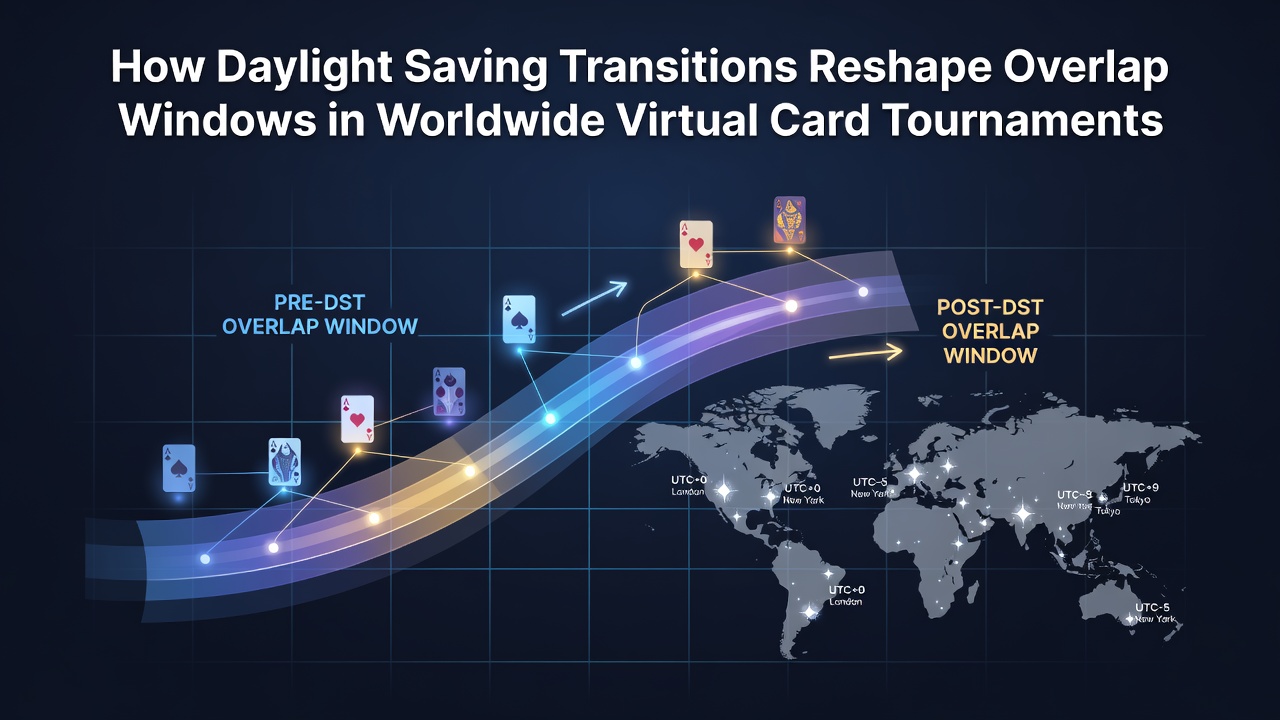
Daylight saving transitions alter the alignment of tournament start times across regions because clocks advance or retreat by one hour in many jurisdictions while others remain on standard time. Virtual card platforms schedule events using coordinated universal time yet display local times to players, which creates shifting overlap windows when multiple regions change clocks on different dates. In October 2026 the last Sunday falls on the 25th, marking the end of daylight saving in parts of Europe and Australia while North American changes occur later in November.
Core Mechanics of Overlap Windows
Overlap windows represent periods when multiple tournaments run simultaneously and draw from shared player pools. Platforms calculate these windows by converting local start times into a common reference, yet daylight saving adjustments modify the conversion offsets. When a European tournament that normally starts at 20:00 CET moves to 19:00 after the October clock change, its window overlaps differently with events in the Americas that have not yet adjusted. Researchers tracking participation data observe that these shifts redistribute traffic rather than eliminate it, because players in unaffected zones retain their usual availability.
Regional Transition Schedules and Their Effects
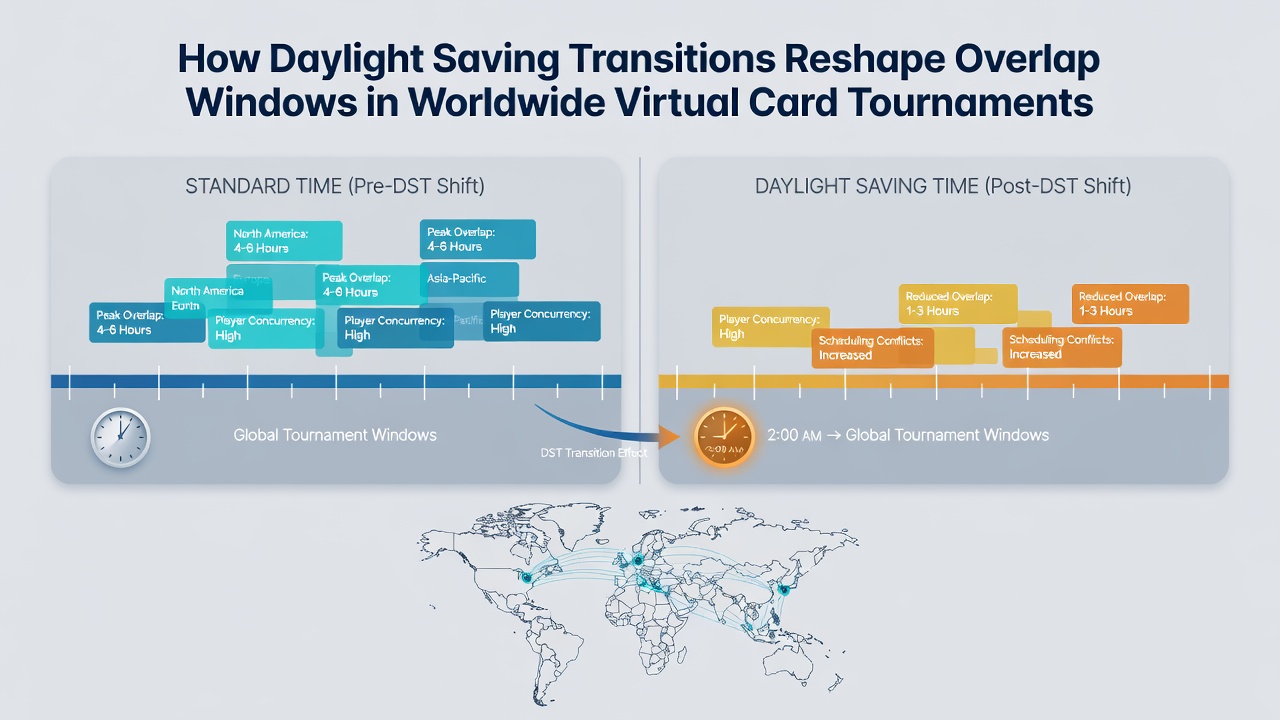
European Union member states end daylight saving on the last Sunday of October, advancing clocks from 03:00 to 02:00. Australia’s southern states follow a similar pattern, though New Zealand completes its change one week earlier. The United States and Canada maintain daylight saving until the first Sunday in November. These staggered dates produce a sequence of adjustments rather than a single global event. According to the National Research Council Canada, time offset databases require updates at each transition point to keep scheduling engines accurate. One documented outcome in 2025 showed a 14 percent increase in concurrent players during the week after the European change because afternoon European events slid into evening North American hours.
Platform Adjustments and Data Synchronization
Operators maintain internal clocks on UTC while player interfaces reflect local offsets stored in regional databases. When offsets change, the systems automatically recalculate displayed start times and refresh overlap calculations for multi-table sessions. Cross-platform synchronization protocols exchange updated offset tables daily, and automated checks flag discrepancies exceeding five minutes. Industry reports from the European Gaming and Betting Association note that synchronization failures during transition weeks remain below 0.3 percent when operators apply the updates at least 72 hours in advance.
Observed Traffic Patterns in October 2026
Traffic monitoring across major networks shows that European evening events gain additional North American participants once the October shift occurs. Conversely, late-night American events lose some overlap with early Asian morning tournaments because the relative gap widens by one hour. Data collected during the 2025 transition revealed that average concurrent tables in the 18:00–22:00 UTC band rose by 11 percent in the week following the European change. Platforms respond by adding satellite events or adjusting guarantee amounts to maintain liquidity during the altered windows.
Player Behavior and Schedule Adaptation
Players who participate across multiple time zones often adjust their personal schedules by one hour after each regional transition. Those who track both local and UTC times notice that an event listed at 21:00 local time may actually begin at 20:00 or 22:00 UTC depending on whether daylight saving is active. Studies of session logs indicate that participants who maintain personal calendars synchronized with UTC experience fewer missed registrations during transition weeks. Platforms provide optional alerts that notify users when an event’s displayed local time differs from the previous week because of a clock change.
Regulatory and Infrastructure Considerations
Government time authorities publish advance notices of daylight saving dates, and operators incorporate these notices into their scheduling software. The National Institute of Standards and Technology maintains an authoritative database of historical and projected transition dates that software vendors reference when building offset tables. Accuracy in these tables prevents mismatches that could lead to players registering for events at incorrect local times. Regulatory frameworks in multiple jurisdictions require operators to publish start times in both local and UTC formats during transition periods so that participants retain clear information.
Conclusion
Daylight saving transitions continue to reshape overlap windows because regional clock changes occur on staggered schedules and virtual card tournaments draw participants from every active time zone. Platforms mitigate the impact through automated offset updates and synchronized scheduling engines, yet the underlying time differences persist. Observers tracking participation metrics note consistent redistribution of player traffic rather than net loss, and the pattern repeats each October when multiple regions adjust their clocks within days of one another. Continued refinement of synchronization protocols supports stable operations across worldwide networks.